News
Delivering high-quality biomolecular data where it is needed: How OBIS coordinates and implements eDNA Expeditions 2026-2028
21 October 2026
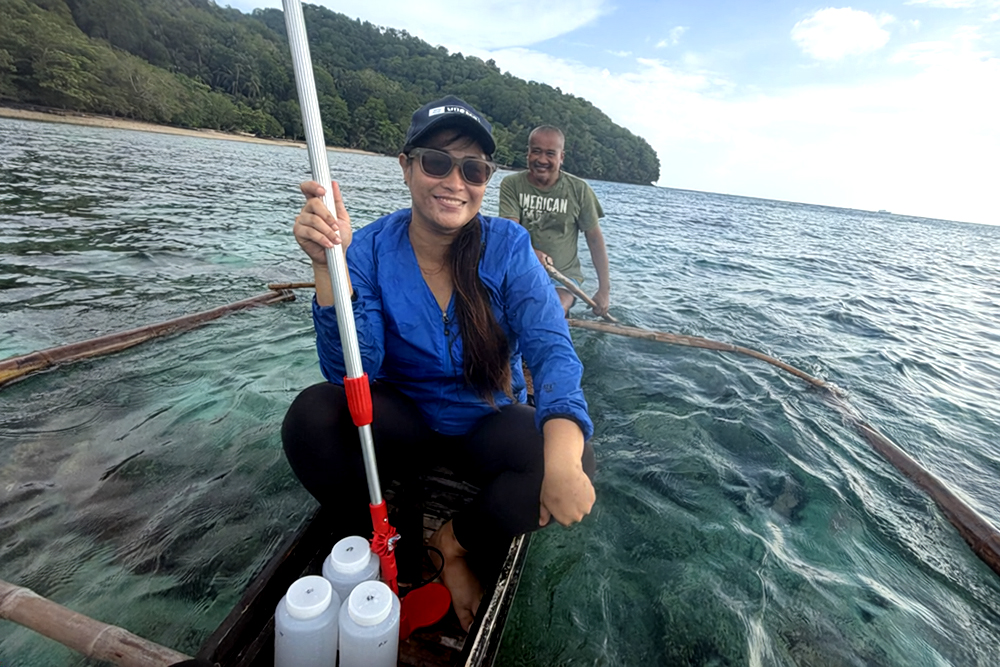
Sampling in shallow waters at the Giant Clam Sanctuary under the expert seamanship of a Bantay Dagat.
Camiguin Island, Philippines, September 2026. © Tricksie Balatero
Access to reliable, high-quality data is crucial for marine management and conservation. Yet, mostly due to a lack of resources, ocean life remains under-observed, with large areas of the ocean not surveyed or incompletely surveyed, even in areas close to shores. eDNA Expeditions 2026-2028 aims to address that gap by providing local management teams and coastal communities with access to DNA-derived data generated from local samples. Coordinated and implemented by OBIS under the Intergovernmental Oceanographic Commission (IOC) of UNESCO, and funded by Minderoo Foundation with technical support from Wilderlab, eDNA Expeditions 2026-2028 aims to bring DNA-derived data where it is needed. Each step of the project mobilizes the biomolecular and bioinformatics expertise of the OBIS team, from establishing a robust and inclusive sampling protocol to designing local science plans that put generated data into action, and creating a multipurpose digital backbone to manage the huge amounts of DNA-derived data from the initiative.
From a pilot phase to scaling up
The initial concept behind eDNA Expeditions started with a simple question: what would change if local marine management teams had access to the biomolecular observation data from their local waters? Environmental DNA (eDNA) — the genetic traces left by organisms in their environment that can be analyzed — has been changing how we observe life. A powerful complementary method to traditional surveys, eDNA allows for surveying large and hard-to-reach areas with a minimal field footprint, combined with detection capacity ranging from bacteria to whales. But to generate reliable and usable data, eDNA as an observation technique requires a solid sampling protocol, financial and technological capacity to carry out the sequencing of the samples, as well as scientific capacity to make sense of the generated data. eDNA Expeditions combines logistical, technological, and scientific support with a community engagement component and state-of-the-art data management to bring biomolecular insights from local samples directly into the hands of local management teams and communities who can act to protect their waters.
What would change if local marine management teams had access to the biomolecular observation data from their local waters?
To test this approach, a pilot phase, coordinated and implemented by OBIS and the World Heritage Centre, took place from 2022-2024 at 21 marine World Heritage Sites. That pilot phase aimed to field-test and verify whether non-expert participants — members of local communities, including schoolkids — could, under the supervision of scientists, carry out eDNA sampling from which reliable data could be generated; and whether the generated results would carry significant scientific meaning and impact. The pilot phase went beyond expectations. 250 participants, some as young as six, successfully contributed to identifying more than 4,000 species, with 120 on the IUCN Red List and 16 critically endangered. These results allowed management teams at each surveyed site to better understand the life in their waters. For OBIS, that pilot phase was an opportunity to test the reliability and efficiency of its sea-to-screen data workflow, and learn from that experience.
Local by impact, global by design
To increase the impact of eDNA Expeditions 2026-2028, the OBIS team further developed and reimagined four components from the first phase:
- sampling campaigns are now repeated up to 9 times at 25 participating sites through the entire project lifecycle, allowing for much more precise monitoring and tracking of potential trends;
- the generated data directly informs concrete and often pressing local environmental questions, such as early detection of invasive species or identifying cryptic or elusive species, and can directly support conservation actions;
- local communities, such as the Bantay Dagat at Iligan Bay in the Philippines and the artisanal fishers at Huatulco in Mexico, are at the centre of the project as participants and direct beneficiaries of the actions supported by the generated data;
- and the data management platform that supports the initiative has been drastically improved to better identify, integrate, quality-control, and track the provenance of each sample on its journey from sea to screen.
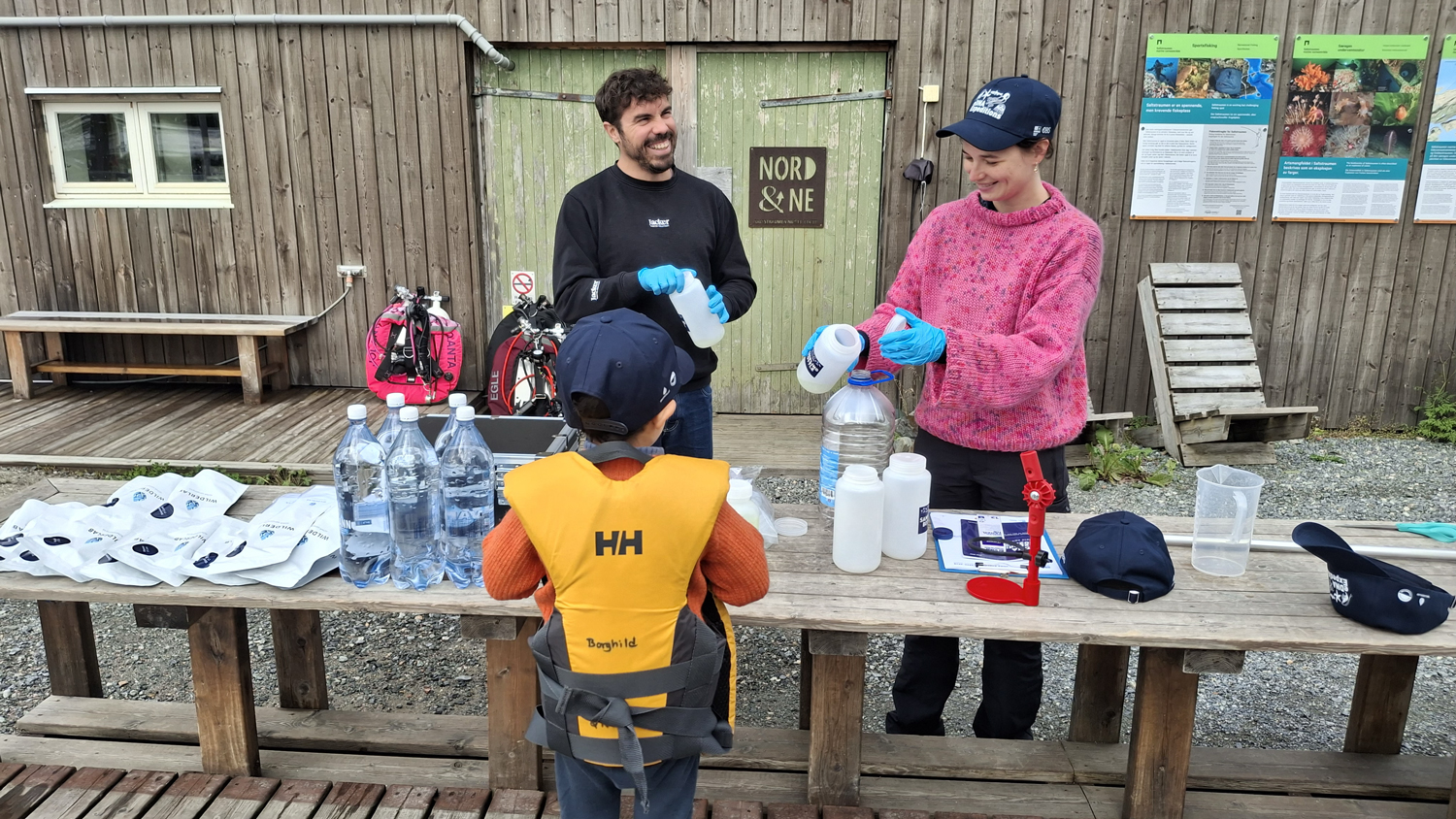
Preparing sampling bottles and equipment before the sampling event.
Saltstraumen, Norway, August 2026. © eDNA Expeditions
The OBIS team worked closely with each of the 25 site teams to operationalize that approach. First through an onboarding process that included science calls, the establishment of a detailed science plan that would guide why, where, and when the eDNA sampling would take place; then with the provision of training material and guidelines, especially focusing on inclusivity for non-expert audiences. The team also developed a robust sampling protocol and deployed a field-proof sampling kit to fit diverse and often harsh marine environments. Beyond the preparation phase and practical sampling guidance, the OBIS team supports each site to help local managers make sense of the results generated and guide how the data can be used.
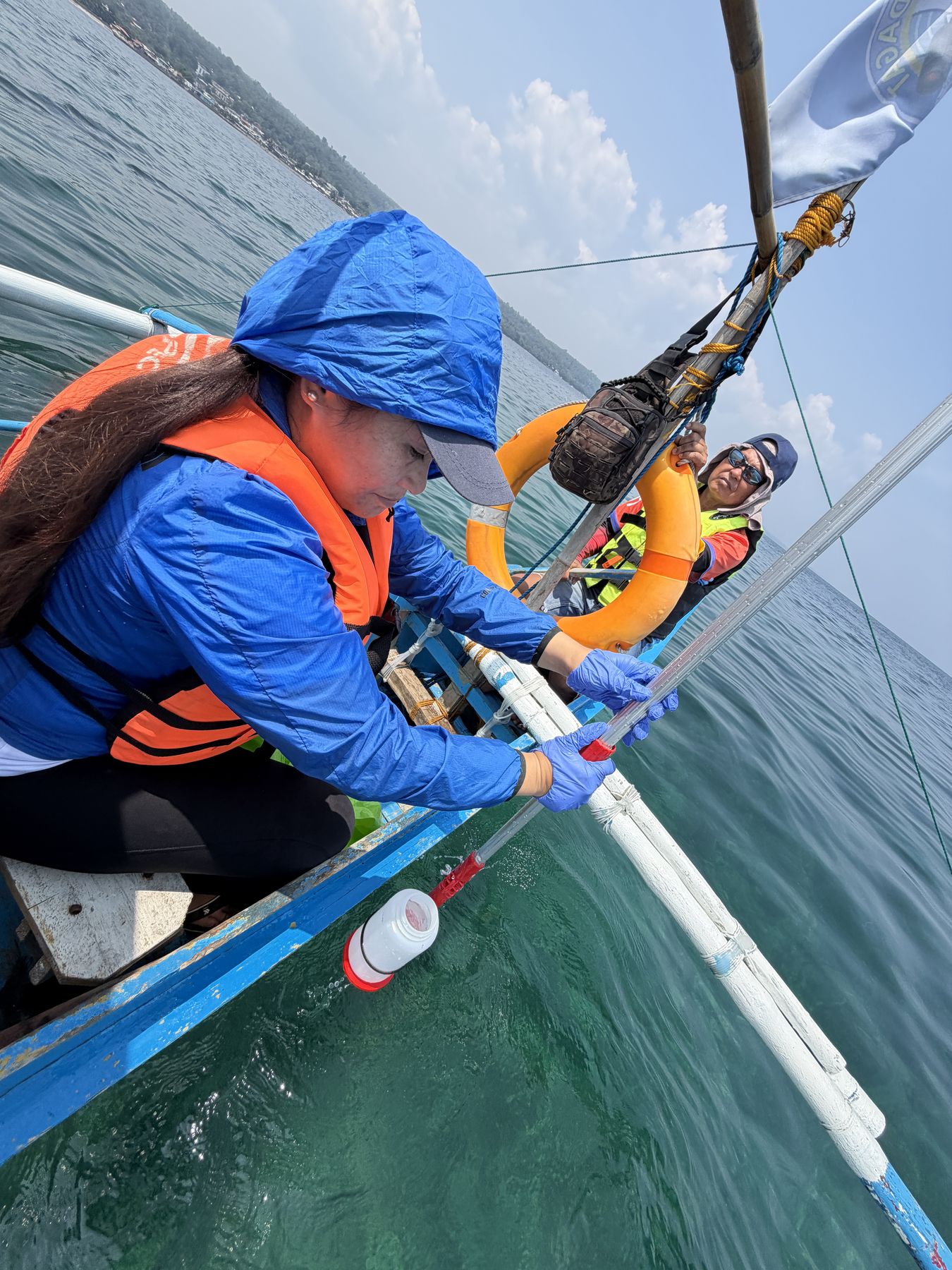
On-boat water sampling aboard a “bangka”, a traditional Southeast Asian outrigger vessel that can be propelled by a small gasoline- or diesel-powered engine, a single-cylinder water pump engine, or even a repurposed automobile engine.
Iligan Bay, Philippines, September 2026. © Tricksie Balatero
Delivering high-quality and reliable data
Because of the objectives and scale of the initiative, the data management component of eDNA Expeditions 2026-2028 is a technological challenge. Data provided to local sites needs to be reliable, FAIR, and formatted as Darwin Core. It must also be transparent, with full provenance tracking that ensures the original data providers retain ownership and receive credit. The number of samples sequenced will reach over 3,000 by the end of the project, requiring a robust bioinformatics pipeline to manage and make accessible the vast quantities of data generated by the initiative while maintaining the highest possible quality in the data. The OBIS team harnessed its experience from the pilot phase to develop a sea-to-screen data management process that would cover all the needs and steps of eDNA Expeditions 2026-2028.
That process starts in the field, when information about an eDNA sample collected by a local team is uploaded through a dedicated app. The app automatically records the time, location, and other properties of the sample along with the unique ID of the sampling kit, ensuring provenance tracking from the source. The app sends each sample record to the eDNA Expeditions data management platform, where it is registered under a persistent ID — a unique number that will be forever attached to that sample. The record follows the sample along its journey and is updated at each step: when the sample is dispatched to Wilderlab — the technical partner of eDNA Expeditions 2026-2028, when it reaches the lab, when it is sequenced, and as results become available.
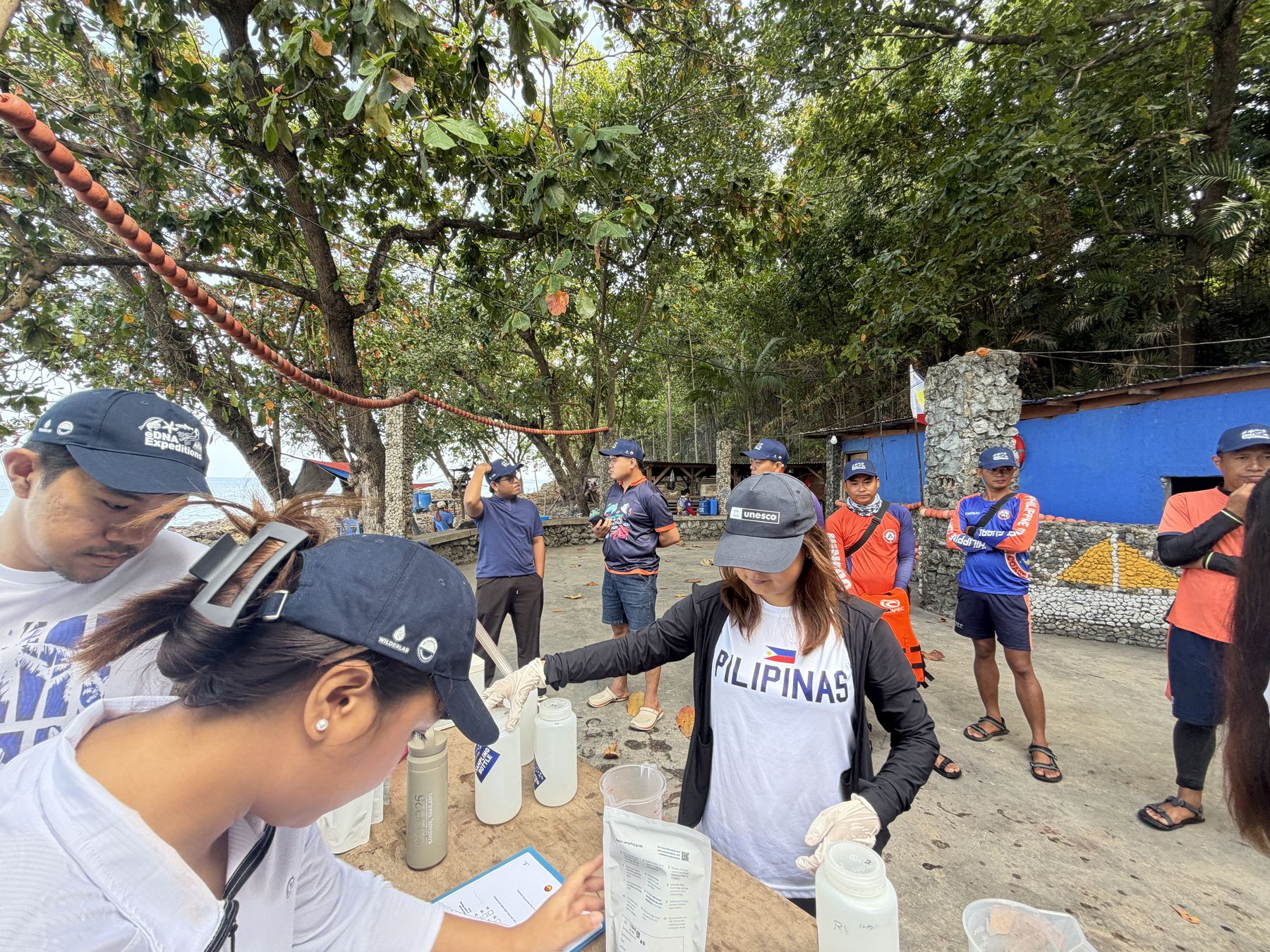
Citizen Science event and sample training at the Dalipuga Marine Protected Area.
Iligan Bay, Philippines, September 2026. © Claudine Nakila
One of the challenges of eDNA sampling is to be able to reliably identify the species from a sample by comparing to existing reference information - known sequences from characterised specimen samples - which are publicly shared through the International Nucleotide Sequence Database Collaboration (INSDC). To address that challenge, once the sequence data is uploaded to the eDNA Expeditions data management platform, the OBIS team uses an open-source metabarcoding workflow called nf-core/ampliseq that cleans the raw data and creates Amplicon Sequence Variants (ASVs), the distinct DNA sequences found in each sample. Each ASV is compared against the same reference databases using two different methods, each aiming at different objectives, before combining the results.
The SINTAX method provides the identification for the higher taxonomic levels, from kingdom to genus. It does so by comparing short stretches of DNA, called “k-mers”, with the reference sequences and repeating the comparison many times to measure how confident it is at each taxonomic rank. Confidence is rated from 0 to 1 for each rank, and results below the confidence cutoff threshold of 0.8 are dropped. The VSEARCH method provides conservative species-level identification by aligning the sequence directly against each reference sequence available in the reference database. Only sequences that are 100% identical to the reference sequence are given a species-level name. If there are multiple exact matches pointing to different species, no species-level identification is assigned, and we fall back to the higher-level SINTAX classification.
Species-level assignments from SINTAX not confirmed by the more conservative VSEARCH method, accession numbers of matching reference sequences, and SINTAX confidence levels for all taxonomic ranks are all recorded in the identificationRemarks field of the Darwin Core-formatted dataset to provide more context to data users. Assigned names are automatically aligned to the World Register of Marine Species (WoRMS) taxonomy.
Quality control of the results
After that first taxonomic step, the data moves down the management platform to a quality control step that combines an automated tool and local human expertise. The automated tool assesses all the identified records using the species’ distribution — the areas where a given species is known to live based on information from OBIS and GBIF (excluding eDNA occurrences) — and the species’ thermal range — the range of temperatures in which a species is known to live. All species identifications receive a score based on these categories.
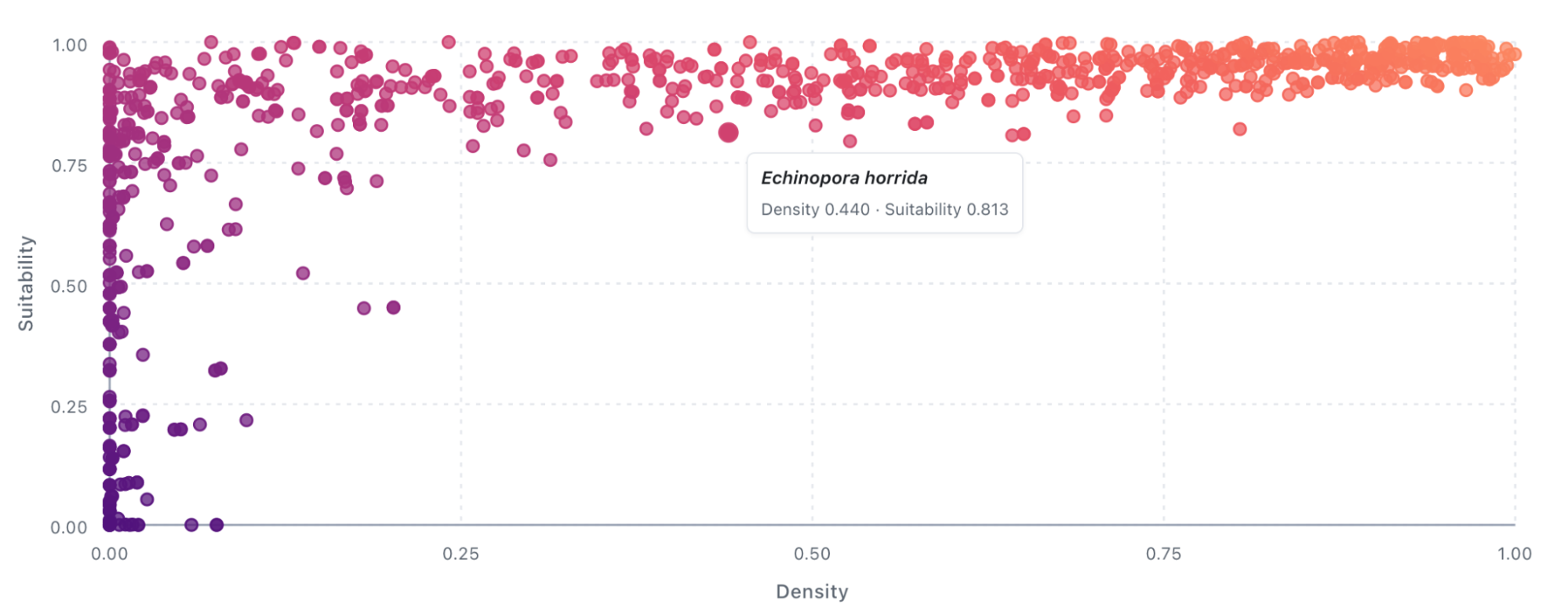
Example of a dataset quality profile. The X axis represents the agreement with the known distribution of the species, the Y axis represents how well detections align with the known temperature preference of the species. Identifications in the lower left corner are usually low quality. Detections in the top left corner do not correspond well to the currently known distribution, but could be explained by range expansions or incomplete reference data.
If a species was identified from a sample outside its known living areas or if the temperature at the sampling site is outside the suitable range for that species, the identification receives an overall low score and is highlighted on the list. A low score might mean a misidentification, or could be a real discovery, such as the identification of a newly arrived invader, a species expanding its habitat, or a species that was thought to be locally extinct. This is when local experts come in to support the quality control process. They can confirm, question, or correct each identification. Their decisions carry through to the data published on OBIS and are recorded in the identificationRemarks field. The data is finally delivered in the Darwin Core format, ready for publication to OBIS and GBIF.
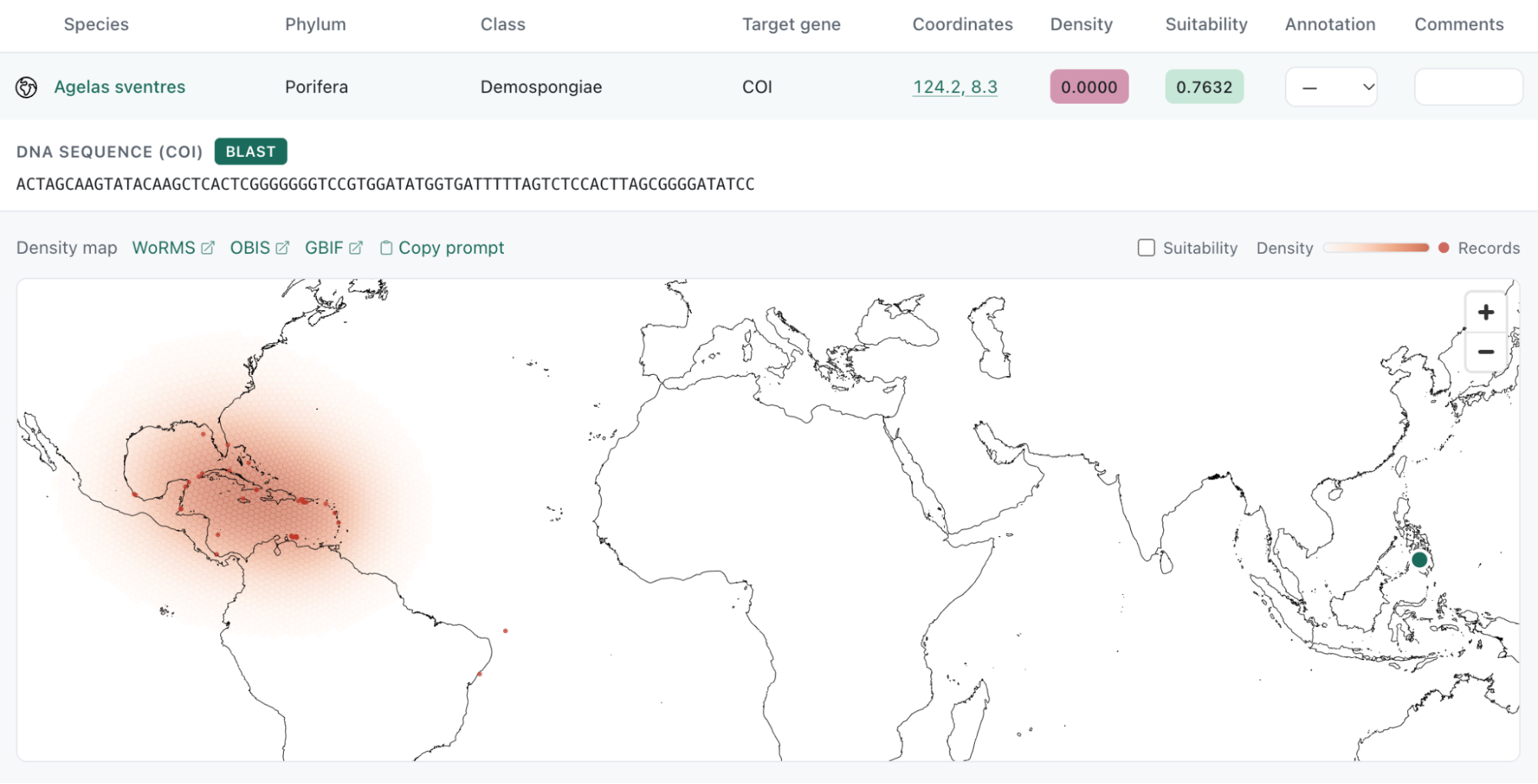
Example of a suspect identification. While the identification scores reasonably well on temperature suitability, its location (Philippines) does not at all correspond to the known distribution of the species (Caribbean). Further investigation of the reference sequence revealed that it was obtained from Malaysia, so it may have been misidentified by the submitter.
eDNA Expeditions 2026-2028 aims at one thing: making change happen. The initiative supports local impact by providing local communities and site managers with the reliable data they need. If successful, eDNA Expeditions 2026-2028 can pave the way to an even more ambitious project: establishing a future global biomolecular marine biodiversity observation network. ◼️
eDNA Expeditions 2026-2028 is a project endorsed by the UN Decade of Ocean Science for Sustainable Development 2021–2030.

